News

22 years later…Radlett SRFI finally breaks cover

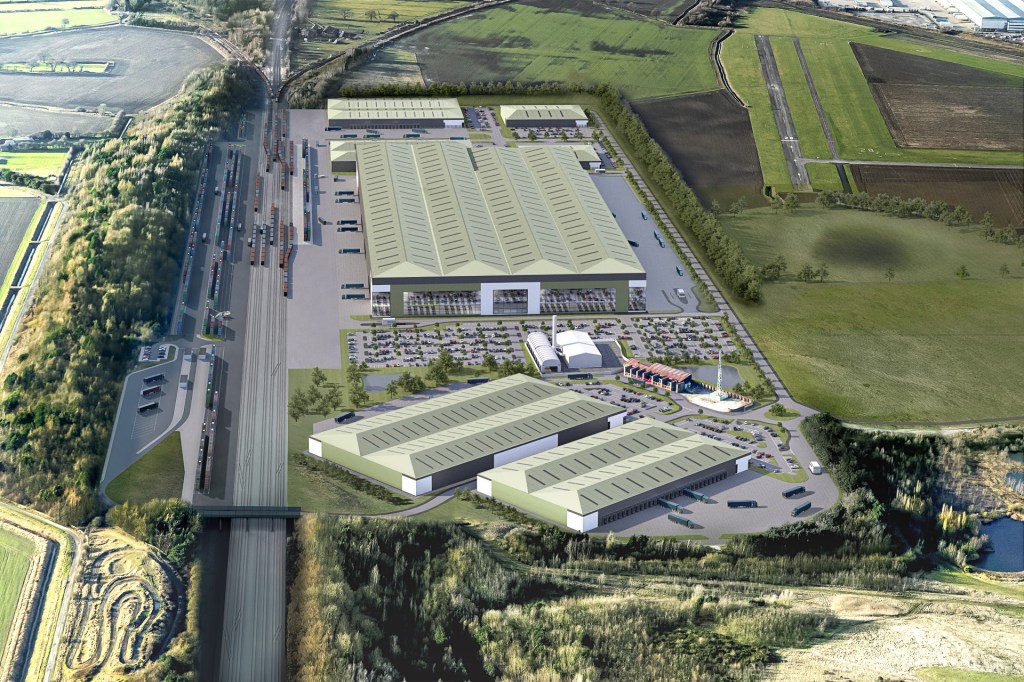
Radlett SRFI illustrative masterplan
Radlett SRFI illustrative masterplan – now under construction

Not long after Intermodality first established in 2002, we were asked by client Helios Properties (now Verdion) to give some thought to a proposed new rail-linked distribution park alongside the M25 and the Midland Main Line. Little did we know at the time that this would become our longest-lasting project, as well as highlight the challenges of major infrastructure development in the UK.

The site was previously home to Radlett Aerodrome, which opened in 1930 as a grass aerodrome for Handley Page civil aircraft. The site was then used for production of watime Hampden and Halifax bombers, and the post-war Hastings and Hermes airliners and, most famously, the Victor bomber. Yet by the 1st June 1970 Handley Page had ceased to exist. The site was subsequently redeveloped with the hangars converted for business use, the airfield area for sand and gravel extraction. The M25 started construction in 1973 and the first section opened 3 years later.

The Radlett site had already been flagged by Railtrack as a possible development opportunity for a rail freight interchange, and in due course by the then Strategic Rail Authority (SRA) in its 2001 Freight Strategy, as one of 3 to 4 major new freight interchange sites which would be needed around London to support growth.

2006: Planning Application #1

We started producing initial reports and drawings in 2003, working alongside an expanding team towards submission of a planning application in 2006 by Helioslough (then a joint venture between Helios and Slough Estates, the latter now known as SEGRO which has retained the Helioslough company), for a Strategic Rail Freight Interchange (SRFI) with 3.3 million sq ft of rail-served warehousing and an intermodal terminal. The scheme was refused planning consent by the local planning authority.

2007-8: Planning Appeal #1

Helioslough appealed the decision, with a Public Inquiry held in 2007, the Appeal being dismissed by the Secretary of State in 2008 following the recommendation of the Planning Inspectorate – in part on the basis of not being satisfied that Helioslough had demonstrated that no other sites would come forward to meet the need for further SRFIs to serve London and the South East.

2008-9: Planning Application #2

An updated scheme was resubmitted in 2009. The scheme was again refused planning consent by the local planning authority.

2009: Planning Appeal #2

Helioslough appealed the decision, with a Public Inquiry held in 2009, the Appeal being rejected by the Secretary of State in 2010 – who dismissed the recommendation of the Planning Inspectorate that the Appeal should be allowed and granted consent, the Secretary of State again not being
not satisfied with the appraisal of alternative sites.

2010-2011: Judicial Review #1

Helioslough then proceeded with a request for a Judicial Review of the Secretary of State’s decision, which was quashed in 2011.

2011-2012: Secretary of State “Minded to Grant” Consent

The following year, with the scheme being largely unchanged from the 2009 proposals, the same Secretary of State determined that he was minded to grant consent, subject to agreement of planning conditions.

2014: Consent Granted

In July 2014 the Secretary of State finally granted consent with outline planning permission, allowing the development to proceed. But….

2015: Judicial Review #2

In 2015 it was the turn of the local authority to apply for a Judicial Review, challenging the 2014 granting of consent by the Secretary of State. Fortunately the High Court dismissed the application. But…

2015-2018: Garden Village Proposals

Despite the Secretary of State’s 2014 decision remaining in place, the local planning authority then decided that, having fought for the best part of a decade against the principle of development on the Green Belt former aerodrome site, should instead be developed for housing, as a Garden Village. The St Albans City & District Local Plan 2020-2036 Publication Draft 2018 included the Garden Village scheme (with 6,000 houses) in the proposed list of site allocations. This was carried through into the March 2019 submission of the Local Plan.

A Local Plan Inquiry was held by the Planning Inspectorate in 2020, the joint Inspectors writing to the Council in January of that year expressing serious concerns in terms of legal compliance and soundness of the draft Local Plan. Consequently, the Inspectors wrote again in April 2020, citing six main areas of concern, the key issue being the Council’s failure to engage constructively and actively with the neighbouring local authorities on the Radlett SRFI proposal. The Inspectors further noted that it was clear that the Council had no intention of allocating the Radlett site for a SRFI in the Plan and that, in allocating the site for housing to help meet its housing need, it knew that would prevent the creation of the regionally and nationally important SRFI. The Garden Village proposals were not carried forward in the Local Plan, clearing the way for SEGRO to continue progressing the scheme. But…

2018-2023: Site Acquisition

SEGRO continued to progress discussions with the landowners, including Hertfordshire County Council, to assemble the 1,000 acre site needed for the scheme (800 acres of landscaping and country park, and 200 acres for the SRFI). Following negotiations, the County Council sold its interest to SEGRO in June 2023, clearing the way for SEGRO to continue progressing the scheme. But…

2023-2024: Judicial Review #3

In September 2023 a Community Interest Company applied for a Judicial Review of the County Council’s decision to sell the land to SEGRO, arguing that the sale was unlawful. In June 2024 the Court refused permission to apply for the Judicial Review, upholding the County Council and SEGRO’s arguments. The Court also found that the claim had not been brought promptly as required.

2024: The SRFI finally emerges

Having worked for so long to deal with the various hurdles and challenges, it has been heartening to see tangible progress now being made on site. In October 2024, The New Civil Engineer published an online article explaining the progress now being made to construct the first major element of the rail layout which we created two decades earlier, namely the new underpass structure installed over Christmas 2024 (link here). The site is expected to finally become operational in 2028, some 26 years after conception, joining the small network of operational SRFI, each of which has generated rail freight traffic. Sadly, Radlett remains the only one of the original 3-4 M25 SRFI envisaged by public policy. At least, for now….

Further information on the development can be found here.

Worcestershire housing project plugged in Chancellor’s opening speech

Rachel Reeves MP used her first speech as incoming Chancellor of the Exchequer to cite one of our client projects.

The Chancellor stated that “we will create a new taskforce to accelerate stalled housing sites in our country, beginning with Liverpool Central Docks, Worcester Parkway, Northstowe and Langley Sutton Coldfield.”

We have been working with client Summix on the the project, situated in close proximity to the new Worcestershire Parkway station, 2 miles from Junction 7 of the M5, 5.5 miles south east of Worcester city centre and 4.5 miles from Pershore. Acting as lead promoter, Summix is promoting Worcestershire Parkway as an allocation for residential-led mixed use development and will represent part of a new settlement providing a substantial housing supply over the course of the plan period.

The emerging local plan issued by the Local Planning Authority in November 2019 has included this site and surrounding landholdings as part of the proposed allocation for the new settlement in and around Worcestershire Parkway station. Summix continues to progress detailed technical work in conjunction with local stakeholders to promote Worcestershire Parkway as an allocation via the Local Plan review.

Our role is focussed on the interface with Network Rail, whose main line routes radiate out from Worcestershire Parkway station (with whom one of our team was previously involved as Project Delivery Director), together with a network of at-grade and grade-separate crossings of the lines that will fall within the scope of the various housing developments planned in the area.

First freight train to Ferrybridge Multifuel

Friday 5th July 2024 saw major rail freight operator Freightliner deliver the first trial load of containerised feedstock from Manchester to Enfinium’s Multifuel power station. Having had the foresight to install a dedicated rail terminal when the power station was being built during 2013-2015, this first train represents an important stage of Enfinium’s overall plan for using rail.

Having worked with Enfinium during 2022 to look at rail options for inbound feedstock and outbound carbon capture and storage, and latterly with developers Mountpark to help secure planning consent for redevelopment of the adjacent former coal yard (retaining the rail facilities), we received the call from Freightliner (another long-standing client) at the end of April regarding the prospect of a trial being undertaken in July, around 2 months ahead.

From our involvement in the site in recent years, we realised the work that would be needed in advance to ensure the train could be operated through the SSE rail sidings at Ferrybridge, before setting back into the Enfinium sidings, which had yet to receive any rail services since construction several years previously.

Working with SSE and their managing agents JLL, we organised a site visit in May to assess the condition of track and signalling, proposed a plan and were instructed in June to work alongside the existing rail maintenance contractor MLP Rail, drafting in specialist signalling resource from colleagues at 9th Wave Consulting and contractors OSL as required. Discussions with Freightliner, Network Rail and Enfinium ensured all parties were kept informed as required.

A 2-week programme of works on site brought all the relevant on-site track and signalling assets up to full working order, Freightliner bringing a locomotive into site in advance of the trial service as part of the testing regime. With everything in place, the trial train arrived on the Friday evening and departed on the Monday morning as planned, with feedstock containers unloaded at the railhead to test the delivery of material to the power station.

Dr. Jane Atkinson CBE, Chief Operating Officer at enfinium, said: “I am delighted that this trial has connected Ferrybridge to the UK’s rail network for the first time. I am grateful for the support of SUEZ and Freightliner in enabling us to achieve this step. It has opened up a range of opportunities for the business to help local authorities around the UK divert their unrecyclable waste away from climate damaging landfill.”

Ed Wilson, Commercial Director at Freightliner, said: “Freightliner’s ability to build strong, long-standing relationships with our customers allows us to deliver reliable and safe services. This trial showcases the importance of the development of rail across the UK and beyond in order to support and help achieve key sustainability targets, remove traffic from our busy road network and to support moving more volume by rail.”

Intermodality is delighted to have been involved in helping achieve a successful outcome in a relatively short timescale, and look forward to further developments by Enfinium, Freightliner and Mountpark at Ferrybridge in the months ahead.

Harworth puts Gascoigne Interchange on the map

Gascoigne Wood is a 185-acre former colliery site in Sherburn-in-Elmet, North Yorkshire. Sited equidistant from Leeds, York and Doncaster, the site benefits from existing rail connections to two separate plots either side of the Leeds – Hull main line, and lies within 6 miles of the A1(M) and the M62. Since 2021, Network Rail has used part of the site as a logistics hub to support the Transpennine Route Upgrade Project.

Following an unsuccessful application to secure planning consent for warehousing on the site, Harworth has pursued a revised scheme for 1.5 million sq ft of floorspace, Intermodality being drafted in to assist with the new application. This builds on a long-standing relationship with Harworth across multiple sites in the company’s portfolio.

In June 2024 Harworth successfully secured a resolution to grant planning permission from North Yorkshire Council’s Strategic Planning Committee. The approved plans have the potential to deliver up to £190 million gross development value (GDV). The proposal is the delivery of seven units, ranging from 57,000 sq. ft. to 1.0 million sq. ft., all built to Grade A specification, with Harworth expecting to start on site in 2025.

We are now continuing to work with Harworth on rolling out the marketing strategy and development of the rail facilities. Further information can be found here.

Great British Railways: Intermodality supports freight market development plan

December 2022 saw the publication of Great British Railways Transition Team’s “Market Development Plan: GBR actions and activities to grow rail freight.” The report highlights several areas where Intermodality has been commissioned to assist the nascent “guiding mind” for the rail industry with the development of the rail freight sector.

The report’s title page shows the reinstated railhead at Newhaven Port, which we helped design and develop with Network Rail, Bretts and Newhaven Port & Property. Material produced by Intermodality for GBR, as noted in the report, has included an assessment of the shortfall between regions of Intermodal Rail Freight Interchanges (IRFI). These are standalone railheads designed to provide rail access in areas not otherwise served by the larger Strategic Rail Freight Interchanges (SRFI). Intermodality has spent much of the last 21 years providing support to development of SRFI at Radlett, iPort Doncaster, East Midlands Gateway, West Midlands Interchange, Oxfordshire SRFI and most recently helping secure the allocation of the Parkside East SRFI within the St Helens Local Plan. We have also helped with the design and delivery of IRFI now operating at Severnside, Knowsley and Wilton (SUEZ) and at Tinsley (MLP for Newell & Wright Group).

We have also produced a report for a combined Network Rail / GBR team on the role that the Major Stations portfolio could once again provide, within the re-emerging market for express freight and urban logistics, another area of specialism and development by Intermodality over the past two decades, from working with EWS on its original award-winning trainload services, to organising proof-of-concept services into London’s Euston station for Eddie Stobart and Sainsburys, and in turn for TNT/Fedex (the latter funded by us). We have since worked with HS1 and Eurotunnel to assess the opportunities for cross-Channel services, with GB Railfreight, rolling stock leasing companies and a major retailer prospect on domestic services, as well as with property developers and Network Rail looking to create purpose-built distribution centres and urban cross-dock facilities. Last but by no means least, we have provided Board-level support to another award-winning start-up, ICRF’s unique 125mph parcels-on-passenger train service, which launched back in 2011 and now spans multiple modes of transport and service providers, exploiting unused space on scheduled services to move time-sensitive shipments across the network – Red Star reimagined for the 21st Century.

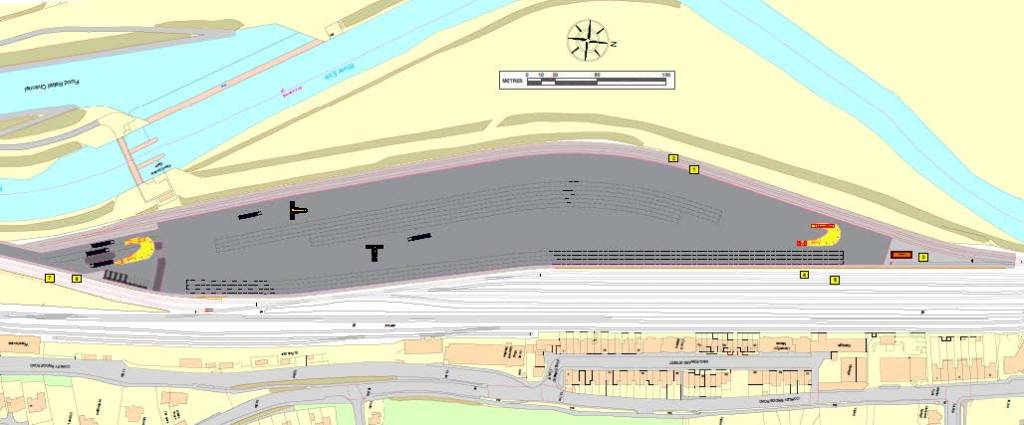
Further support has been provided to GBR on development of site layouts for IRFI across the country in areas where provision is lacking, the GBR report citing one of Intermodality’s plans produced for an IRFI at Exeter to serve the South West region of the UK.

As Intermodality enters our 21st anniversary year, we are proud to continue our track record of supporting growth of sustainable transport (now covering both freight and passenger sectors) through public policy and commercial investment. We will be showcasing 21 years of achievements throughout the course of 2023, so keep in touch for further updates.

Lowestoft goes live

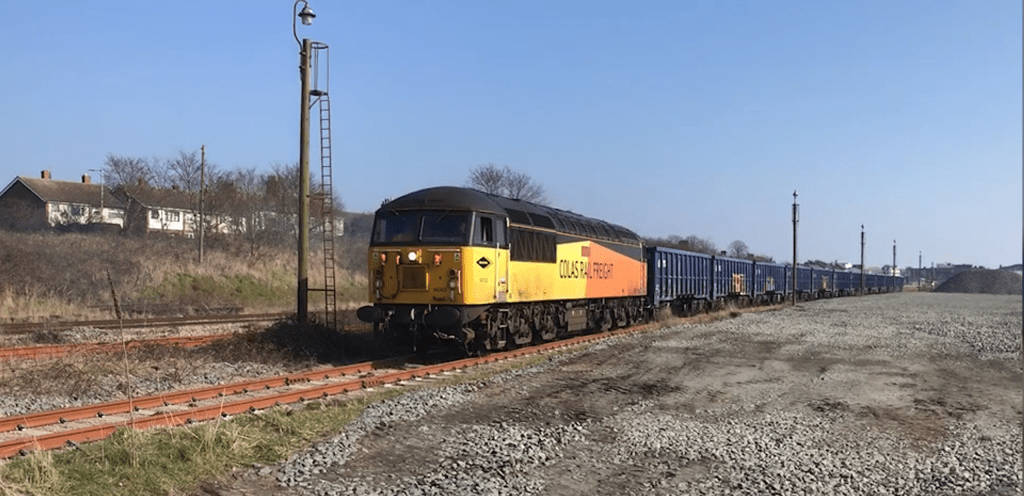
This week marked the start of operations from another railhead in our portfolio. Working with Network Rail on initial design work in 2018, construction started on site in 2019, leading up to the first train of imported aggregates leaving Lowestoft bound for Longport, to help address the growing demand for construction materials.

This adds to the ever-expanding list of railheads we’ve helped along the way to fully-operational status, which in recent years has included:

  • Liverpool Tuebrook Sidings (GB Railfreight / Hanson 2021)
  • Sheffield Tinsley (Newell and Wright / MLP 2021)
  • Newhaven (Brett / Newhaven Port / Network Rail 2020)
  • Leicester Humberstone Road (DC Rail 2020)
  • Thorney Mill (Link Park Heathrow / Ashville Aggregates 2019)
  • Luton (Cemex / Network Rail 2019)
  • iPort Doncaster (iPort Rail / Verdion 2018)

We look forward to helping many more on their way in the years to come.

From iPort to Newhaven Port: triple-whammy for clients at Rail Freight Group Awards 2020

Yesterday’s prestigious “virtual” RFG Awards (of which we were a proud recipient in 2011) delivered three industry “gongs” for four of our clients, two of which involved projects which we’ve been heavily involved with.

iPort Rail, operators of the iPort Doncaster Strategic Rail Freight Interchange (SRFI) which we helped plan and secure consent for developer Verdion, have taken a brand new terminal with no pre-existing customers and, in less than 2 years, grown the business to more than 6 trains per day – the fastest launch of a SRFI to date. No surprise therefore that Steve Freeman and his team at iPort Rail scooped the Business of the Year Award.

At the other end of the country, in what was otherwise a backwater for rail freight, Network Rail and Brett Aggregates secured the Rail Freight Project of the Year for the reinstatement of the derelict railhead on the quayside at Newhaven in East Sussex. For our part in helping the project from inception with Newhaven Port & Properties, through to working on the design with Network Rail and, in turn, assisting Bretts with design and contractor procurement, this was a well-deserved winner – on which you can find out more below in earlier posts.

Not to be outdone, client DC Rail and partner VTG also collected an award for Rail Freight Project of the Year for movement of recycled materials. Intermodality has provided support to DC Rail in the opening up of new railheads at Willesden and Leicester.

Our congratulations to all four of our clients, and thanks in turn to the RFG judges for selecting these projects.

Newhaven: new railhead goes live

Network Rail today reported the first train into the reactivated railhead at Newhaven, the culmination of an 9-year journey with Newhaven Port & Properties (feasibility study in 2011), Network Rail (initial design input) and finally with Brett Aggregates (final design and contractor procurement).

train

Suffice to say we’re delighted to have helped yet another railhead return to life, with the road network from the Sussex Coast up to West London relieved of up to 80 lorry loads in each direction, and the emissions generated by moving the material reduced by over three-quarters compared to movement by road.

Intermodality would like to congratulate the team from the Port, Network Rail, Bretts and contractors KGJ Price for making this happen, the new railhead being only a stone’s throw (sorry) from our registered office.

Photos courtesy Network Rail

West Midlands Interchange: consent granted for Strategic Rail Freight Interchange

Today saw the Development Consent Order (DCO) granted by Government for a new Strategic Rail Freight Interchange (SRFI) at Four Ashes in Staffordshire. The West Midlands Interchange (WMI) will add to the small number of existing SRFI already in operation, further expanding the network of rail-served sites available to distribution companies and their customers.

West Midlands Interchange is being promoted by Four Ashes Limited – a consortium led by Kilbride Holdings, working in partnership with international property group Grosvenor Group and majority landowner Piers Monckton. The Kilbride Holdings team has developed rail-based projects for Jaguar Land Rover in Halewood and Castle Bromwich, and Honda as well as a number of infrastructure-led developments in the UK.

Intermodality’s involvement with the project dates back to 2006, building on our long working relationship with Kilbride as one of our first clients. Over the last 14 years we have helped to design the rail-related elements of the WMI project, provided input to the various rounds of community and industry consultations, as well as the draft DCO submission itself, and the subsequent Panel Hearings by the Planning Inspectorate.

Given the paucity of rail-served warehousing in Great Britain compared to mainland Europe, the announcement is another welcome step towards creating a network of sites across the country, linking SRFI with major ports, mainland Europe and other RFI. Every single SRFI built and opened to date has since delivered on its core objective – creating new rail freight services by improving rail access to occupiers and the surrounding hinterland.

With the current lockdown set to dramatically change future shopping and supply chains, developments such as WMI will be at the forefront of helping society and business adapt to the “new normal”. Rail freight is anticipated to play a much greater role going forward, as much in delivering goods from the quayside to national distribution centres, as in onward secondary distribution out to the regions, across an expanding range of intermodal, conventional and express rail freight services.

To date we have helped SRFI at Radlett, iPort and now WMI secure planning consent as the first stage towards implementation, helped with expansion of other SRFI at Mersey Multimodal Gateway and DIRFT phase II (Sainsbury’s), and are now working on a pipeline of further future SRFI prospects across the country. Since 2002 we have also helped create or reactivate RFI at Severnside, Knowsley and Wilton (SUEZ), Castle Donington (M&S), Gascoigne Wood (Harworth), Lowestoft (Network Rail), Leicester (DC Rail), Luton (Cemex), Newhaven (Brett / Newhaven Port & Properties), Sheffield (Helios) and Thorney Mill (Link Park Heathrow).

DC Rail fast-tracks into Leicester

First train into DC Rail's new railhead at Leicester Humberstone Road (photo DC Rail)

First train into DC Rail’s new railhead at Leicester Humberstone Road (photo DC Rail)

Demonstrating yet again that rail freight services don’t always require years of planning, DC Rail‘s launch of services into a reactivated Leicester City Centre railhead took a matter of weeks. In June last year we were approached by Network Rail to develop layout options for the Humberstone Road side (our 43rd railhead project for the company since 2014 ). Network Rail subsequently agreed to lease the site to rail freight operator DC Rail, who then asked if we could develop the options further, the last plan being produced as late as January this year.

Proof positive of what can be achieved with very basic facilities, industry co-ordination and a bit of help behind the scenes.